Chinese Extractive Question Answering

HW7 抽取式问答
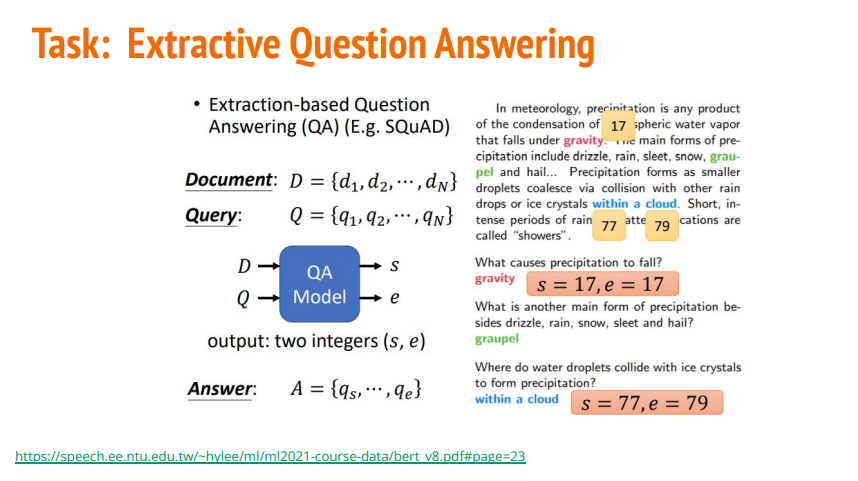
Task description
- Chinese Extractive Question Answering
- Input: Paragraph + Question
- Output: Answer
- Objective: Learn how to fine tune a pretrained model on downstream task using transformers了解如何使用转换器对下游任务的预训练模型进行微调
- Todo
- Fine tune a pretrained chinese BERT model 微调预训练的中文 BERT 模型
- Change hyperparameters (e.g. doc_stride) 更改超参数(例如 doc_stride)
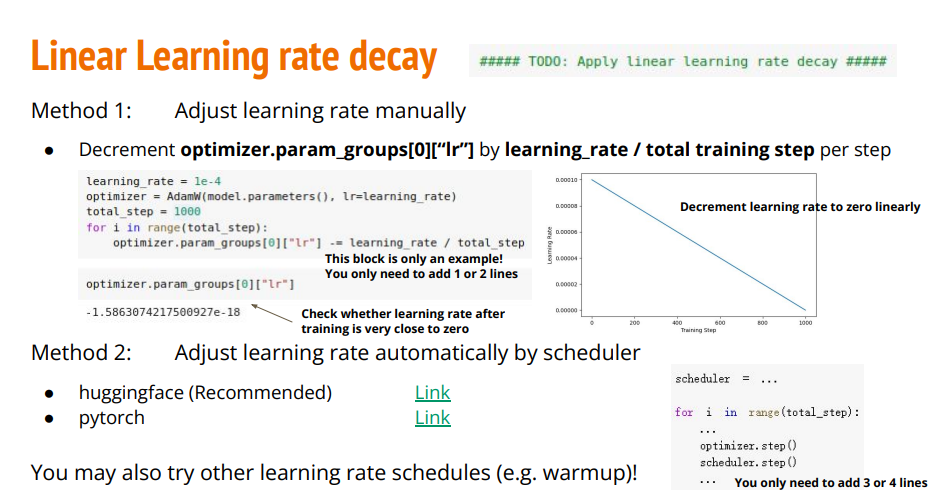
- Apply linear learning rate decay 应用线性学习率衰减
- Try other pretrained models 尝试其他预训练模型
- Improve preprocessing 改进预处理
- Improve postprocessing 改进后处理
- Training tips
Automatic mixed precision 自动混合精度
Gradient accumulation 梯度累积
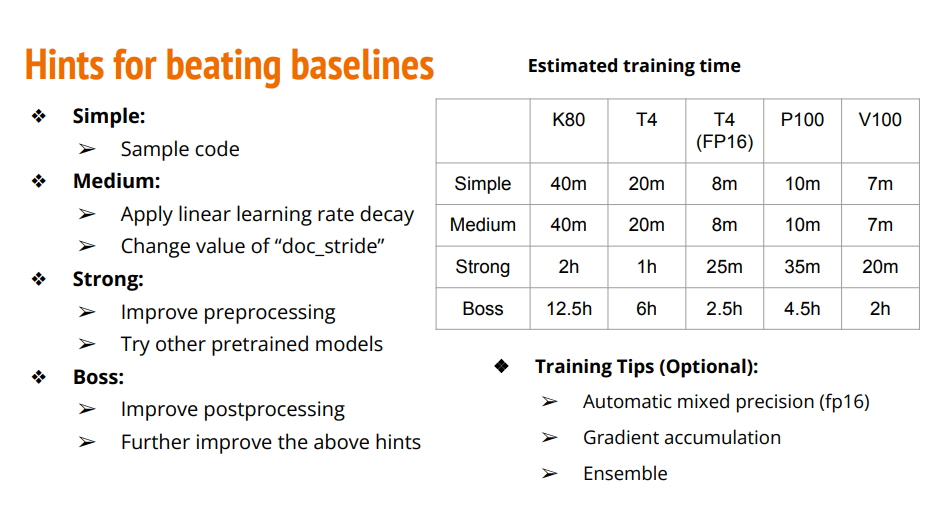
Ensemble - Estimated training time (tesla t4 with automatic mixed precision enabled)
- Simple: 8mins
- Medium: 8mins
- Strong: 25mins
- Boss: 2.5hrs
修改策略
Baseline
| 难易程度 | 精确度 |
|---|---|
| simple | Acc >= 0.45139 |
| medium | Acc >= 0.65792 |
| strong | Acc >= 0.78136 |
| boss | Acc >= 0.84388 |
初始代码 Score: 0.53551
1 | Epoch 1 | Step 900 | loss = 0.585, acc = 0.759 |

Medium Baseline Score: 0.62953 Score: 0.64245 Score: 0.67191
- Apply linear learning rate decay
- Change value of “doc_stride”
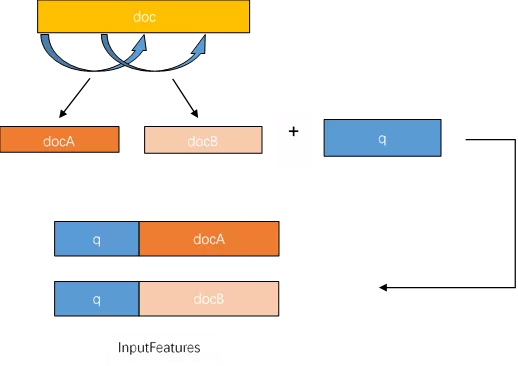
Change value of “doc_stride”
doc_stride参数就是每次滑动的距离
self.doc_stride = 32 Score: 0.62953
1 | Epoch 1 | Step 900 | loss = 0.585, acc = 0.759 |
self.doc_stride = 15 Score: 0.64245
1 | Epoch 1 | Step 900 | loss = 0.585, acc = 0.759 |
self.doc_stride = 15 Score: 0.64205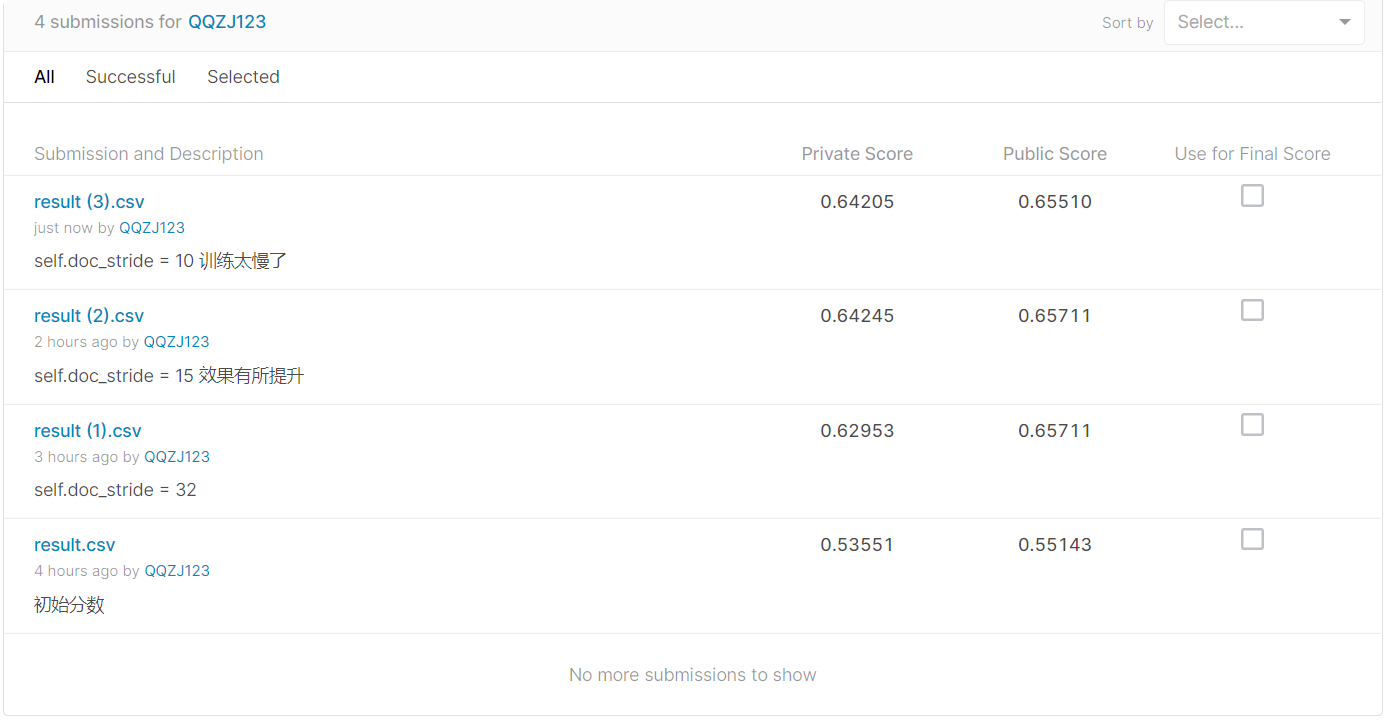
由此可见15是个不错的参数
Apply linear learning rate decay
self.doc_stride = 15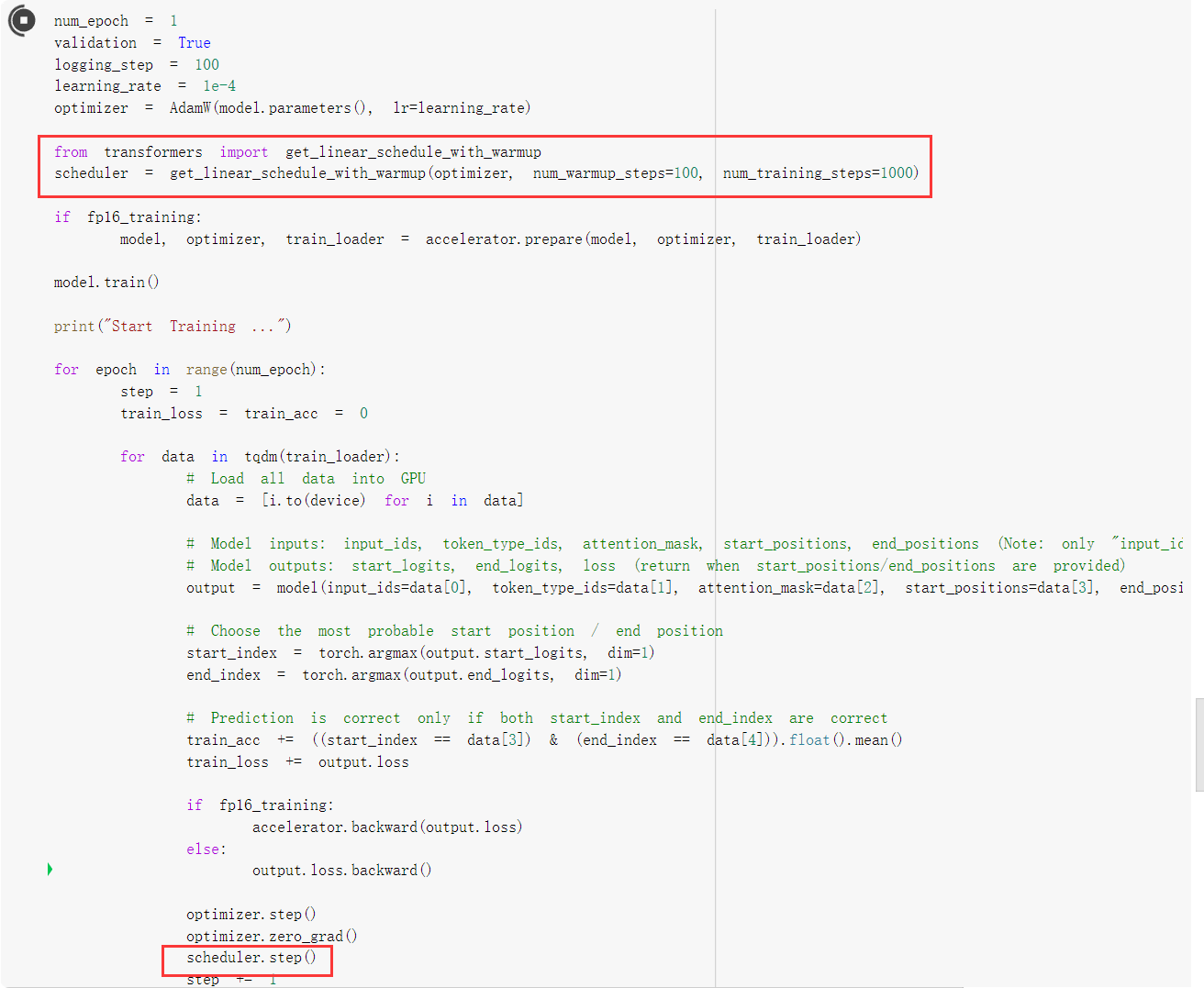
warmup Private score: 0.67191
warmup是针对学习率learning rate优化的一种策略,主要过程是,在预热期间,学习率从0线性/非线性增加到优化器中的初始预设lr,之后使其学习率从优化器中的初始lr线性降低到0
为什么使用warmup?
由于刚开始训练时,模型的权重(weights)是随机初始化的,此时若选择一个较大的学习率,可能带来模型的不稳定(振荡),选择Warmup预热学习率的方式,可以使得开始训练的几个epoches或者一些steps内学习率较小,在预热的小学习率下,模型可以慢慢趋于稳定,等模型相对稳定后再选择预先设置的学习率进行训练,使得模型收敛速度变得更快,模型效果更佳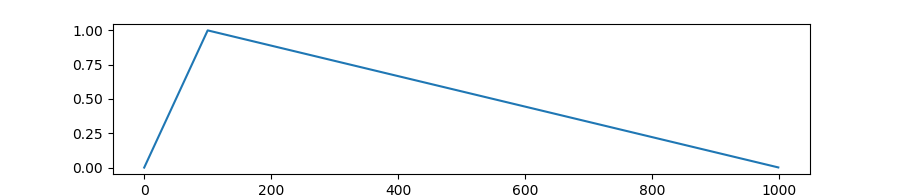
Parameters:
- optimizer (Optimizer) – The optimizer for which to schedule the learning rate.
- num_warmup_steps (int) – The number of steps for the warmup phase.
- num_training_steps (int) – The total number of training steps.
- last_epoch (int, optional, defaults to -1) – The index of the last epoch when resuming training.
1 | 991/991 [17:24<00:00, 1.17it/s] |

更改warmup版本的lr,发现学习率不宜过大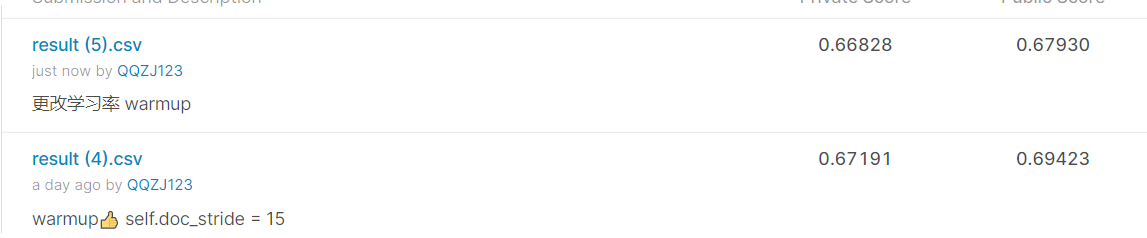
Strong Baseline
- Improve preprocessing
- Try other pretrained models
代码修改
因为我们的下游任务是对中文文章进行阅读理解。所以我们在这个网站上要记得选用Chinese,这里的bert-base-chinese模型,是最初始的模型,我们在这里选用luhua/chinese_pretrain_mrc_roberta_wwm_ext_large作为我们的改进模型。
使用新的Pre-train模型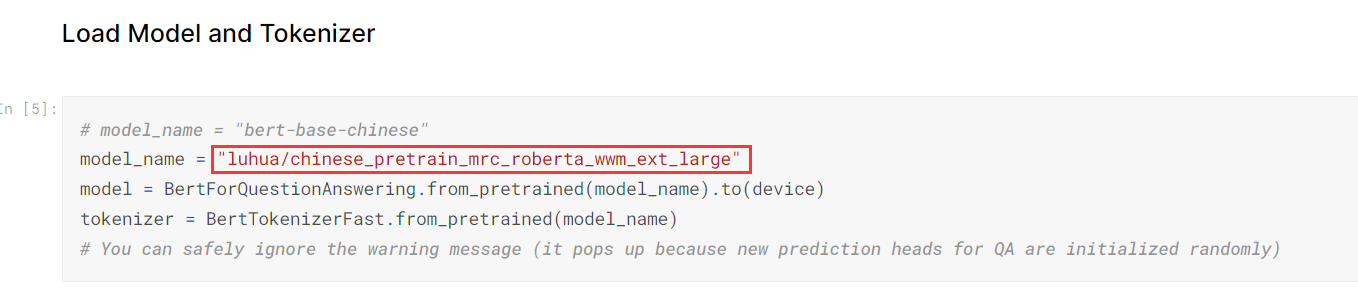
新模型内存很大,降低batch_size。(或者使用助教在视频中提到的技巧Gradient Accumulation来解决batch_size不够的情况)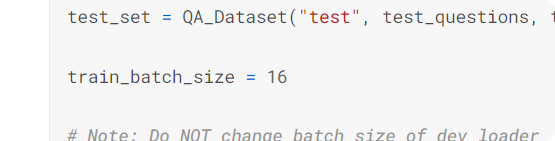
preprocessing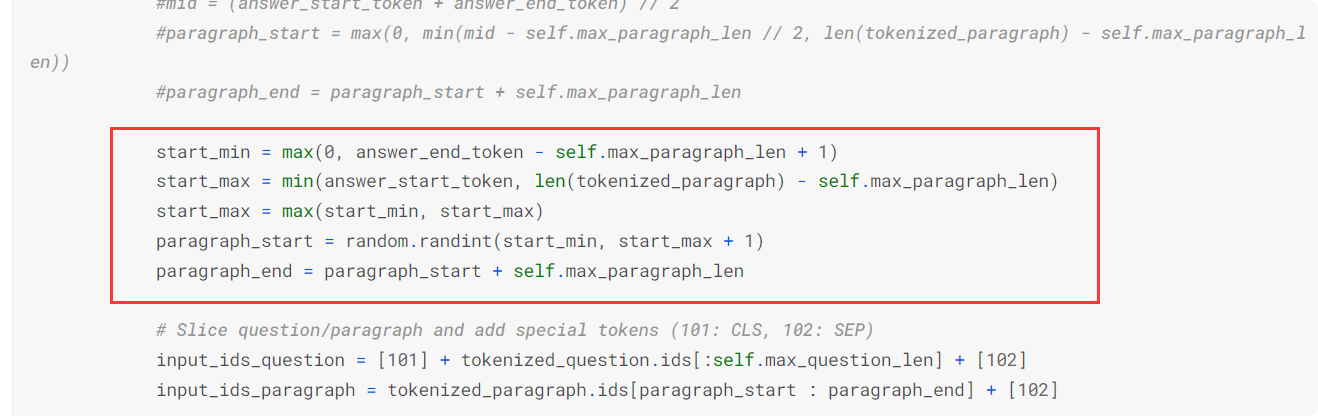
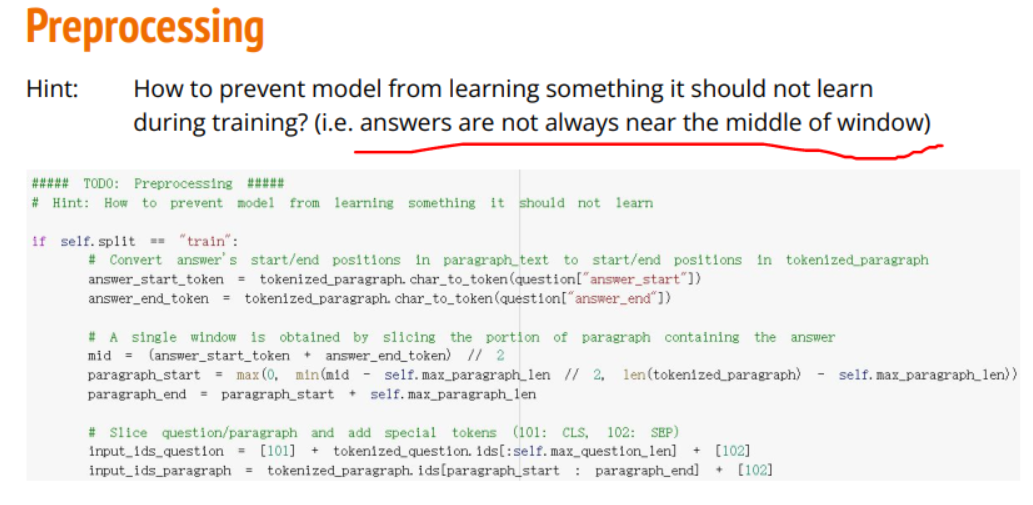
原代码中的训练集都是以answer为中心截取段落,这可能让模型学习到“答案在段落中央”这样的结论,为避免此问题,我将训练集变为随机抽取片段,并且片段包含答案
将训练集变为随机抽取片段,并且片段包含答案,意思就是answer在片段的any位置而非先前的只在中间。
postprocessing
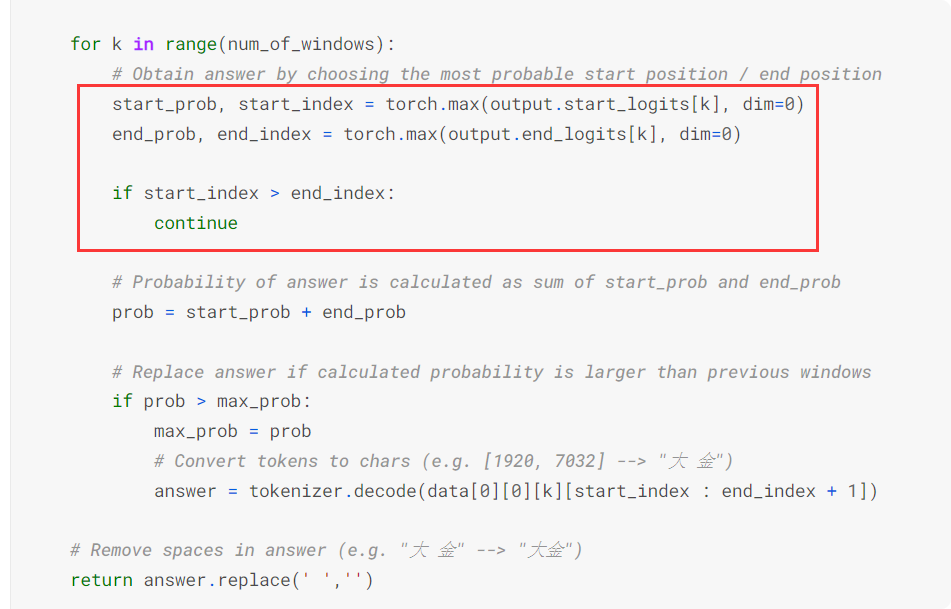
1 | Epoch 1 | Step 1500 | loss = 0.431, acc = 0.820, lr=1.1392405063291139e-05 |
对学习率进行微调,得出最好的结果为0.78006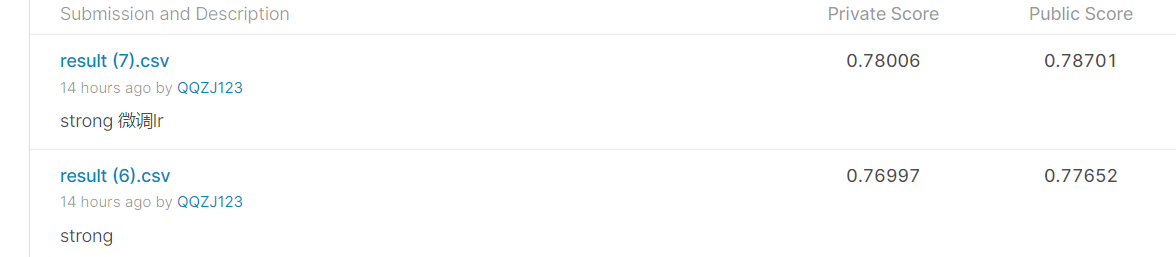
Boss Baseline
- Improve postprocessing
- Further improve the above hints
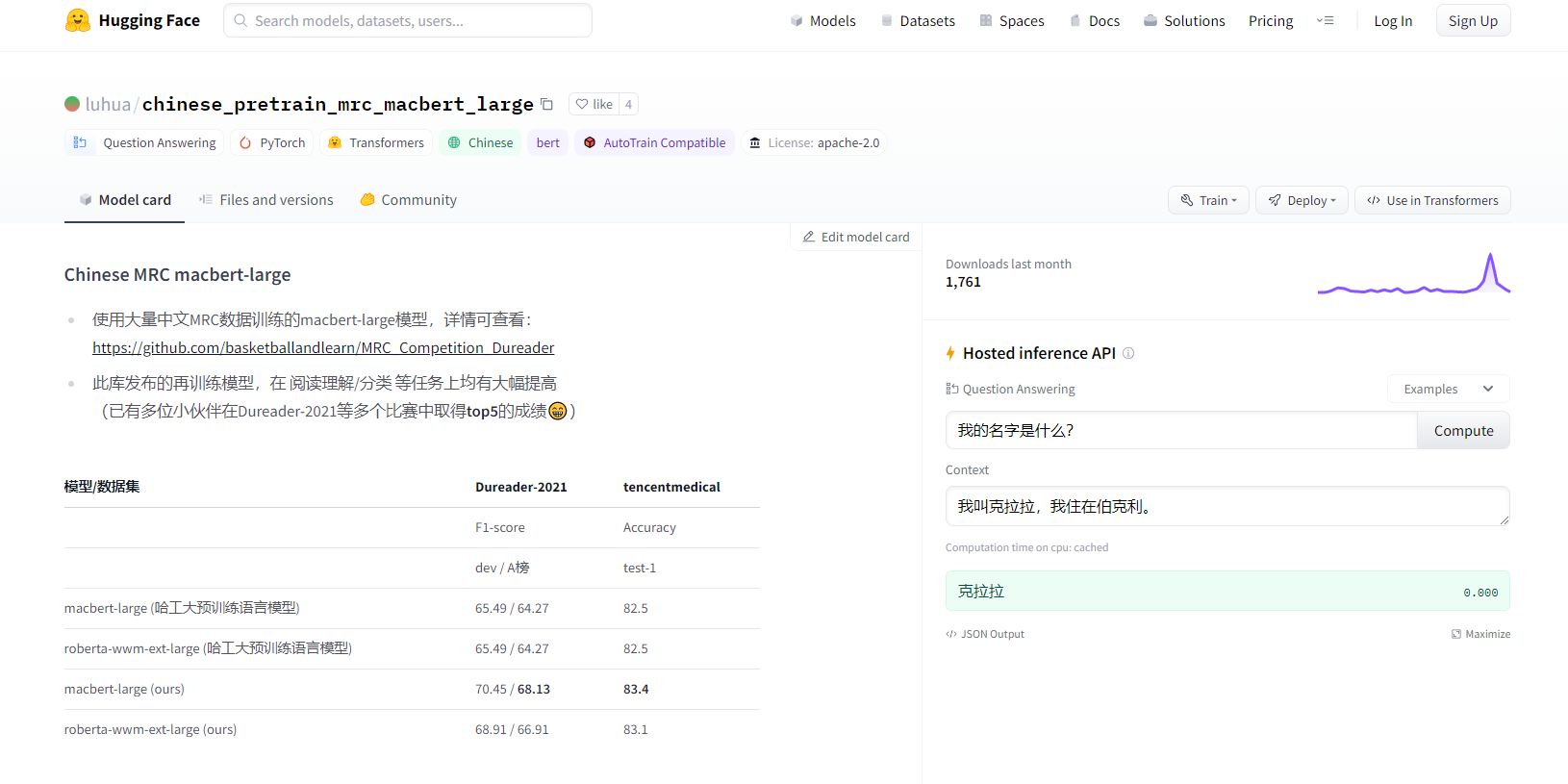
在hugging face中搜索chinese + QA的模型,根据model card描述选择最好的模型。这里就直接选了同一个作者的另外一个模型
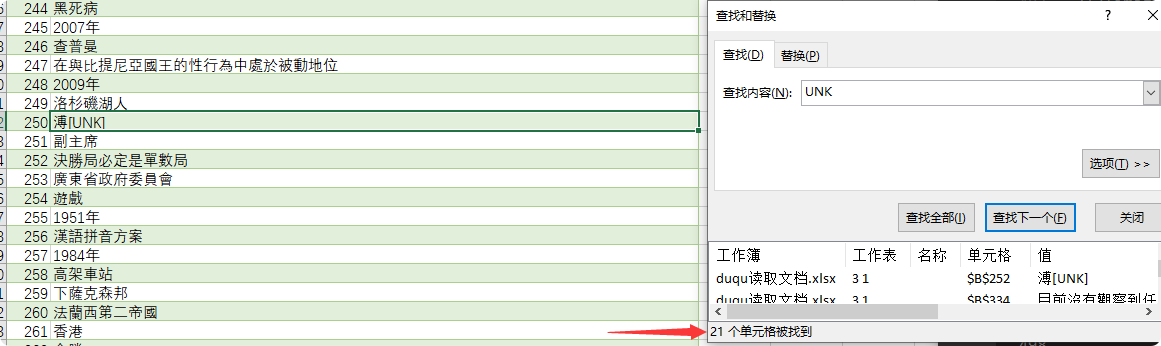
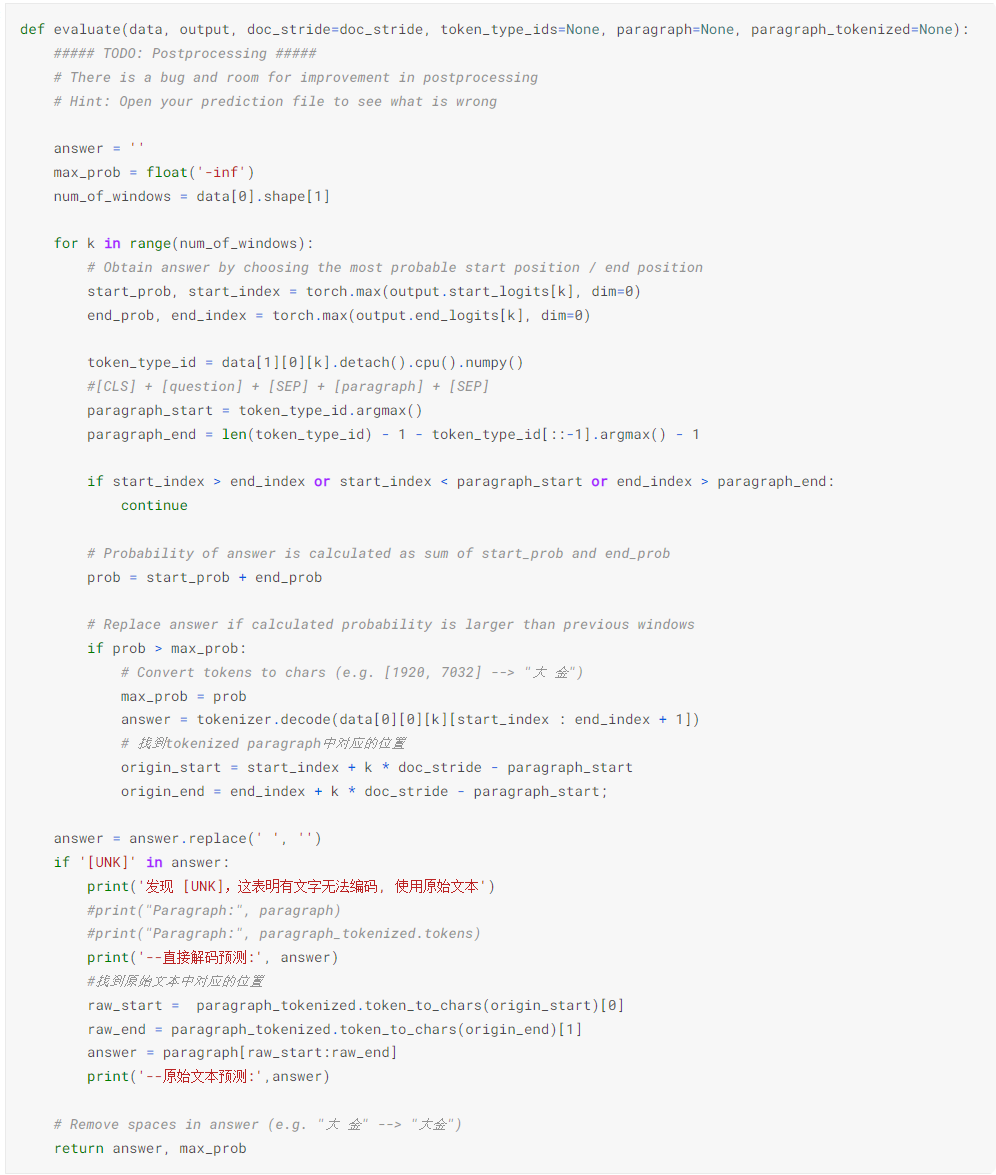
处理结果集中的特殊字符
- 标题: Chinese Extractive Question Answering
- 作者: moye
- 创建于 : 2022-08-16 15:01:08
- 更新于 : 2025-12-12 18:22:53
- 链接: https://www.kanes.top/2022/08/16/Chinese Extractive Question Answering/
- 版权声明: 本文章采用 CC BY-NC-SA 4.0 进行许可。